
MONTHLY FOCUS: UNDERSTANDING FURTHER CONCEPTS WITH IR35

MONTHLY FOCUS: UNDERSTANDING FURTHER CONCEPTS WITH IR35 A focus taking a deeper look at the practical aspects of IR35. This month, we look at dealing with HMRC, the tax and NI regulations, and the IR35 calculations. Dealing with HMRC Can IR35 clearance be given by HMRC? HMRC expects workers, intermediaries and clients potentially affected by IR35 to use its online “check employment status for tax” (CEST) tool to determine if a contract is caught or not. While this tool has been significantly improved there might be occasions when individuals need to consult HMRC more directly. If you would like to Speak to any of our Expert Accounting and Financial Teams Please Call Us On 0161 872 8671 Or see Our Accounting Services Pages for more Information It has a specialist unit dealing with IR35 enquiries. The staff there are professional and helpful. They can be contacted in writing, by phone or e-mail: HM Revenue and Customs IR35 Customer Service Unit, S0733, Newcastle Upon Tyne, NE98 1ZZ United Kingdom 0300 123 2326 email: ir35@hmrc.gov.uk Where HMRC is reluctant to express an opinion regarding IR35 status, the issue can be forced by asking it to make a formal decision under the Social Security Contributions (Transfer of Functions, Etc.) Act 1999. What’s HMRC approach to IR35? IR35 is a big issue for HMRC, in fact it devotes an entire manual to the question of employment status. It can be helpful and is a great deal more coherent than it might at first sight appear, and so if an engagement is faced with a challenge from HMRC it’s worth looking at this in some detail (see here). However, ultimately there is no substitute for reading the judgments made by the various courts. It is these and the legislation and not HMRC’s views that determine employment status and IR35 matters. Court judgments can be complex, but they can be persuasive in a dispute of status with HMRC. Quoting the appropriate case and the judge’s comments can stop a wayward tax inspector in their tracks. How likely is an IR35 investigation? HMRC’s attempts to enforce IR35 since its introduction have not been very successful. Despite having specialist units, HMRC is trying to police a large number of personal service companies and investigating them is very time consuming. There are two further problems that stack the odds against HMRC: It will often find both the worker and the client ganging up on it to agree that IR35 does not apply, or the client simply does not want to get involved. There is frequently no money left in the company anyway, so even if HMRC wins a case it will fail to collect much if anything in tax and NI. In essence, HMRC chooses its IR35 battles carefully and is only likely to take on a case where the circumstances suggest a win. Therefore, the more careful the individual is about the way they provide services so as not to flag them as a potential employee, e.g. working set days and hours and generally avoiding being integrated into a client’s organisation, the better. Do the off-payroll rules affect the likelihood of an enquiry? HMRC has said that it won’t use the new rules to open IR35 enquiries into earlier years. In a statement about IR35 and off-payroll working at the end of October 2019 HMRC set out its stall regarding managing and enforcing the rules after April 2021. While there’s no change to the principles which determine if IR35 applies, HMRC says it has “…taken the decision that it will only use information resulting from these changes to open a new enquiry into earlier years if there is reason to suspect fraud or criminal behaviour”. In practice this means the amnesty only applies if the information which could lead HMRC to start an enquiry into earlier years comes out of “…information resulting from these changes…”. For example, if an individual is working under a contract for which they’ve decided IR35 doesn’t apply, but from April 2021 the business they were working for decided it does, HMRC will not investigate the decision unless it has evidence that the individual deliberately acted contrary to the law, e.g. they falsified documents or facts to support the view that IR35 didn’t apply. Where IR35 could apply to work, that is, an individual personally provides services to a client but invoice them through an intermediary (company, partnership, agency or another person), they should keep a record of how they arrived at the view that it didn’t apply. This can include results produced by HMRC’s Check Employment Status for Tax (CEST) tool. What sort of evidence is important in an IR35 enquiry? It goes without saying that HMRC will look at the contract, but it will also ask questions not just of the individuals, but other parties that might be involved. An interesting article was published in February 2008 by a former HMRC inspector who had been involved in some IR35 cases that had gone to tribunal. He analysed four – two won and two lost by HMRC – and concluded that a great deal revolved around the credibility of the witnesses. In particular, in the two cases that HMRC won the judges had been impressed by the testimony of the end client, whereas in the two that HMRC had lost, they had not. Individuals should Counteract this by contacting their client, preferably before HMRC can get to them, speaking to the people who actually know how the contract functions. In the two cases that HMRC lost their witnesses were simply too far from the action. A tribunal is more likely to pay attention to a line manager than an HR person. If control is a point of issue in an HMRC IR35 enquiry, it is worth comparing and highlighting differences between the worker and normal employees of the client. How should an HMRC compliance check be handled? In many ways an IR35 compliance check is like any other tax compliance check. However, like all status enquiries it is
Budget 2025: the key announcements
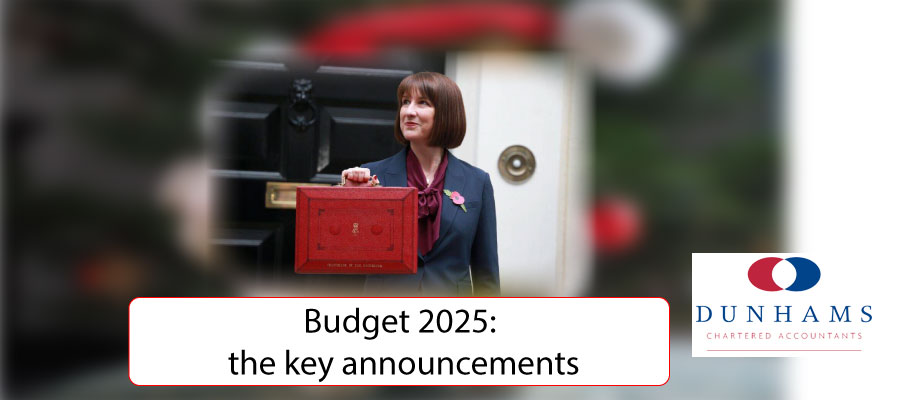
Budget 2025: the key announcements The Chancellor announced many changes to the tax system, with some coming into effect immediately and others in several years. What are the headline changes? In order to meet her fiscal rules and plug the hole in public finances, without technically breaking manifesto pledges, the Chancellor has introduced a raft of changes to the tax system. There are so many changes, that you’re bound to be affected. First the bad news. The income tax rates that apply to property, savings, and dividend income are going up by 2% across all bands (except the additional dividend rate). Dividends will be affected from April 2026, with the hike in property and savings tax rates coming a year later. The cash ISA allowance will be cut to £12,000 as rumoured, but the full £20,000 will still be available by ringfencing £8,000 for stocks and shares, If you would like assistance with this Autumn Budget 2025 Anouncements or any other Accounting Services you can find them here. Or Call Us On: 0161 872 8671 Pensions were thankfully largely left alone. However, the maximum amount that can escape NI charges via salary sacrifice is to be capped at £2,000 from 2029. Drivers of electric vehicles and hybrids are to be slapped with a “per-mile” levy: 3p for wholly-electric vehicles and 1.5p for hybrids. While the Chancellor did not introduce a wealth tax, a council tax surcharge will apply to properties worth more than £2 million. The charge will range from £2,500 to £7,500 and will be payable alongside the existing council tax. However, there was one small bit of good news, as it was confirmed that the £1 million allowance for 100% business and agricultural property relief will be transferrable after all. This means any unused allowance on the death of the first spouse (or civil partner) can be claimed in the estate of the second in a similar way as the nil rate bands. Those are the highlights, but as ever there is much more that didn’t make it into the speech. We’ve summarised all of the main announcements below. Get in Touch Want a financial consultation with no obligation? Call Dunhams Chartered Accountants now on 0161 872 8671 Or email paul.o’brien@dunhams.co.uk or andrew.edwards@dunhams.co.uk Stealth taxes It will come as no surprise that the majority of thresholds will be frozen for a further three years than planned, to 6 April 2031. This includes personal income tax and equivalent national insurance thresholds, the secondary threshold for employer NI contributions. The inheritance tax nil-rate bands are already set at current levels until April 2030 and will stay frozen at these levels for a further year until April 2031. The forthcoming combined allowance for the 100% rate of agricultural property relief and business property relief will also be fixed at £1 million for a further year until 5 April 2031. Unusually, the threshold at which student loans under Plan 2 are repaid will be frozen for three years from 6 April 2027. Capital allowances The main rate writing-down allowance will be reduced from 18% to 14% from April 2026 and a new 40% first-year allowance will be introduced from 1 January 2026 Dividends In a blow to owner-managers, dividend tax rates for basic and higher rate taxpayers will increase by 2% from 6 April 2026. If you’re sitting on surplus profits now is the time to consider declaring higher dividends to take advantage of the current rates. The ordinary rate will rise from 8.75% to 10.75%, and the upper rate from 33.75% to 35.75%. The additional rate will remain unchanged at 39.35%. Property income and savings income Savers and landlords were not spared from the tax increases, but they do have a longer grace period. Tax on savings income will increase by 2% points across all bands. The basic rate will rise from 20% to 22%, the higher rate from 40% to 42%, and the additional rate from 45% to 47% from April 2027. The government is creating separate tax rates for property income. These separate rates mean property income will have its own individual tax rates (as already occurs for the taxation of savings and dividend income). From April 2027, the property basic rate will be 22%, the property higher rate will be 42% and the property additional rate will be 47%. Finance cost relief will be provided at the separate property basic rate (22%). The amount under 65’s can save into a cash ISA will also be capped at £12,000 from April 2027, whilst the overall ISA allowance will remain at £20,000. This means you will need to invest in stocks and shares to get the benefit of the full ISA allowance. Inheritance tax Finally, something for the farmers. In respect of agricultural property relief and business property relief, any unused allowance for the 100% rate of relief to be transferable between spouses and civil partners from 6 April 2026. The unused allowance can be transferred even if one spouse died before 6 April 2026, which is a significant change to the previously announced policy. Employees From 6 April 2026 the deduction from income tax for non-reimbursed home working expenses will be removed. Employers can still reimburse employees for these costs where eligible without deducting Income Tax and NI. From 6 April 2026 the income tax and NI exemption for employer-provided benefits will be extended to cover reimbursements for eye tests, home working equipment, and flu vaccinations. The value of salary sacrificed pension contributions that can receive employee and employer NICs relief will be capped at £2,000 per year. An unpopular policy but at least it won’t come in until 6 April 2029. At Autumn Budget 2024, the government announced it would bring employee car ownership schemes into scope of the Benefit in Kind rules from 6 April 2026. Implementation will now be delayed to 6 April 2030, with transitional arrangements until April 2031. Cars The Expensive Car Supplement threshold for zero emission vehicles will increase
Autumn Budget 2025 (Updated).

Chancellor of the Exchequer Rachel Reeves set out tax-raising measures worth up to £26 billion in the Autumn Budget on 26 November 2025.
The increases will be achieved through a range of measures, including extending the freeze on Income Tax thresholds for a further three years.
Special payroll deadline for Christmas

Special payroll deadline for Christmas If you pay staff early in December because of Christmas it’s important that you enter the information on your payroll submission correctly. When you need that extra help with Payroll, Ask Dunhams Accountants What do you need to know to get this right? PAYE and NI reporting As an employer you’ll be aware of the deadline that applies for reporting payroll information to HMRC. In recent years HMRC has relaxed this where salaries are paid to employees earlier than their usual pay date over the Christmas period. HMRC has confirmed the concession will apply for the 2025 festive period and that it is now a “permanent easement”. What do you need to know to get this right? PAYE and NI reporting As an employer you’ll be aware of the deadline that applies for reporting payroll information to HMRC. In recent years HMRC has relaxed this where salaries are paid to employees earlier than their usual pay date over the Christmas period. HMRC has confirmed the concession will apply for the 2025 festive period and that it is now a “permanent easement”. Enter the right date If you pay your employees earlier than usual you should nevertheless show the normal payment date on your full payment submission (FPS). This isn’t just an administrative convenience for whoever operates your payroll, it’s important for any of your employees who claim universal credit (UC). Entering the actual rather than the normal date they are paid on the FPS can adversely affect their entitlement to the UC. Example. You pay your employees on 19 December 2025 whereas you normally pay them on the last working day of the month, in this example that would be 31 December. On your FPS you should show the payment date as 31 December and submit the FPS to HMRC at any time on or before that date. back to the menu top If you would like any assistance with any of these points. Please Call Us on 0161 872 8671 Get in Touch Want a financial consultation with no obligation? Call Dunhams Chartered Accountants now on 0161 872 8671 Or email paul.o’brien@dunhams.co.uk or andrew.edwards@dunhams.co.uk
How much VAT should you charge on festive goods?
How much VAT should you charge on festive goods? Your business makes and sells goods that are specifically designed for the Christmas trading period and you are preparing for the busy season. What are the VAT issues to consider so that you declare the correct amount of VAT on your returns? Find the Help you need with our VAT Services Mixed supplies Suppose that your business sells a bundle of goods as part of a Christmas package, and some of the goods are either zero-rated or subject to 5% VAT. For example, you might sell a hamper that consists of many food and drink items; some of them will be zero-rated, such as grocery items and cakes, but many will be subject to 20% VAT, e.g. wine, chocolates, soft drinks. In such cases, you should apportion output tax on your selling prices to reflect the different rates, and there are two main methods: Individual selling prices. If your business sells all items on a standalone basis, you can apportion your output tax based on these individual prices. Cost basis. Alternatively, you can use a cost-based method, calculating output tax based on the price you paid for the goods. Either method is acceptable, as is any other method, as long as it gives a fair and reasonable result in terms of the output tax payable on each sale. HMRC does not have the power to prescribe a specific method. If an officer thinks you have underpaid VAT, they have the power to issue a “best judgement” assessment. It is therefore important to stand back and check that your calculations are fair and logical to avoid a potential problem. Don’t forget the packaging Many festive goods include packaging which has a value to your customers in its own right. You must include the value in your apportionment calculations in the following circumstances: the packaging is clearly designed to be retained by your customer for future use it is “more than is required” to serve the goods in question; or the packaging has a secondary use which will benefit the customer in the longer term, such as cups or glasses. Example. Grocer Gail sells a festive product which consists of luxury biscuits packaged in an engraved ceramic container. This is a mixed supply of zero-rated biscuits and standard-rated packaging because the container has a clear value and future use to her customers. HMRC’s published guidance accepts that fancy jars and containers are accepted as normal packaging in most cases, unless it is clear that they are intended to be kept for future use. However, Kilner jars are standard-rated because they are heavy duty jars with wired lids that are used for preserving food. Business splitting? Consider a business that intends to buy and sell Christmas trees during the festive period as a new venture; they are currently registered for VAT and trade as a restaurant. There is scope to create a new legal entity for this activity so that sales can be made without charging VAT, i.e. the total sales of the new entity will be less than the compulsory registration limit. HMRC has the power to prevent business splitting if two businesses are closely connected, so it is important that the owner keeps the new activity completely separate to the restaurant, i.e. separate bank accounts, supplier accounts, record keeping etc. back to the menu top If you would like any assistance with any of these points. Please Call Us on 0161 872 8671 Get in Touch Want a financial consultation with no obligation? Call Dunhams Chartered Accountants now on 0161 872 8671 Or email paul.o’brien@dunhams.co.uk or andrew.edwards@dunhams.co.uk
Multiple tax-free perks for directors

With Christmas in mind a fellow director has suggested your company uses the trivial benefits in kind exemption to provide £300 of tax and NI-free gifts to each director.
Welsh government plans to tweak relief for buyers

Welsh government plans to tweak relief for buyers The draft Welsh Budget 2026/27 confirmed there would be no changes in the rates of land transaction tax. However, it did reveal some related changes are being planned. What’s the full story? Land transaction tax (LTT) is the devolved equivalent of stamp duty land tax in Wales. It operates in a broadly similar way, but the Welsh Government has the power to set the rates and bands. The draft Budget document confirms that there is no intention to change the rates and bands for residential and non-residential property. However, there will be changes to other parts of LTT. Get the extra help you Need Firstly, a new “equalisation” rule will be introduced to the multiple dwellings relief rules. It appears this will provide for an adjustment where properties subject to a claim are chargeable at both the main and higher rates. More detail is expected next month. There will also be an increase in the minimum tax rule rate from 1% to 3%. This rule sets a floor so that the amount of tax collected cannot be less than the specified percentage. Finally, an additional refund rule will apply to higher rate transactions where a landlord leases the property to a local authority in Wales via the Leasing Scheme Wales. This will allow the buyer to obtain a refund of the additional charge in a similar way to someone replacing their main residence. It is expected that, if approved, the changes will apply from April 2026. back to the menu top If you would like any assistance with any of these points. Please Call Us on 0161 872 8671 Get in Touch Want a financial consultation with no obligation? Call Dunhams Chartered Accountants now on 0161 872 8671 Or email paul.o’brien@dunhams.co.uk or andrew.edwards@dunhams.co.uk
MONTHLY FOCUS: PENSIONS AND INHERITANCE TAX
MONTHLY FOCUS: PENSIONS AND INHERITANCE TAX Starting in April 2027, all unused pension funds will be pulled into the inheritance tax (IHT) net. In this Monthly Focus, we look at the proposed changes and how they might affect your estate’s IHT liability. Page Content:- Current Position Pensions and IHT from April 2027 TAX PLANNING CURRENT POSITION What’s the IHT position on pension savings before April 2027? IHT doesn’t usually apply when you pass on your pension rights, which can be a pot of cash and investments or the right to a pension, including any associated lump sum. This applies whether you die before you start taking your pension savings or after. In fact, unlike other types of investment, your pension fund(s) aren’t normally part of your estate, they are held in trust. Most pension savings, whether or not they are held in a registered scheme (one approved by HMRC), are held in discretionary trusts. The trustees decide who is entitled to a share of the money and other assets held by the trust. In practice, they earmark the funds for the person who pays into the pension and, on their death, their nominated beneficiaries. Further, the IHT legislation (Inheritance Tax Act 1984) says that transfer of pension savings you may have been entitled to and which are paid to your beneficiaries on your death don’t count as a transfer for IHT purposes. In plain English, this means they are exempt from IHT. What types of pension scheme currently escape IHT? The current IHT exemption applies to all registered pension schemes subject to the exceptions mentioned below This includes: personal pension schemes (including self-invested personal pensions) workplace pensions required under the auto-enrolment rules – these might be group personal pensions or hybrid final salary type schemes stakeholder pension plans additional voluntary contribution (AVC) plans and freestanding AVCs final salary schemes. These days they are mostly for civil servants, and those working for the NHS and government bodies. The exemption also apples to qualifying recognised overseas pension scheme. These are typically paid into by individuals who have lived or worked abroad. You’ll know if you have one. Also exempt are pension savings in non-registered schemes such as funded unapproved retirement benefit schemes and funded employer-financed retirement benefit schemes where the pension savings and rights to benefits are held in discretionary trust. Get more Help and Assistance from our Accounting Services Get in Touch Want a financial consultation with no obligation? Call Dunhams Chartered Accountants now on 0161 872 8671 Or email paul.o’brien@dunhams.co.uk or andrew.edwards@dunhams.co.uk Are there circumstances where IHT might be payable on pension savings? Yes, there are a number of situations where IHT can apply. Non-discretionary pension rights If the pension scheme is obliged to pay you or your beneficiaries a pension or lump sum, i.e. the payment is not at the discretion of the scheme administrators or trustees, the value of the pension rights will be part of your estate for IHT purposes. The types of pension scheme to which these apply are: so-called buy-out plans, also known as Section 32 plans. These are a type of personal pension plan where a pension company accepts a transfer of your pension benefits under a scheme linked to your employment (an occupational scheme) particularly if the scheme being bought out is being wound up or you leave the employment to which the pension relates. You’ll probably know if you have a Section 32 plan but if you’re unsure check with the pension company or financial advisor retirement annuity contracts (Section 226 contracts). These were the predecessor to personal pension plans. They ceased to be available in July 1986. However, the benefits from these could and often were placed into an individual discretionary trust and so like personal pensions they could escape the IHT net certain types of occupational scheme, typically those set up for company owner managers or directors and senior employees, and some statutory schemes. Again, you’ll probably know if you have one of these. The two-year rule If you’re in poor health which you expect to shorten your life and you deliberately avoid accessing your pension savings or benefits so that more is left in your IHT-exempt pension fund, e.g. you defer taking an occupational pension (that’s a pension linked to your employment), IHT may be payable on the amount of pension income you could have taken. The sort of action that might cause deferral of pension benefits that HMRC might be looking out for are, where in the two years before death you: transfer your pension benefits to another scheme pay in significant extra pension contributions; or transfer benefits in a Section 32 or Section 226 contract to a discretionary trust. Whoever is administering your estate, e.g. the executors, must report this type of transaction to HMRC on Form IHT409. What about income tax on inherited pension savings? After you die the pension company will pay your pension savings or regular pension to the persons you nominated as beneficiaries. Whether or not the payment is taxable depends on how old you were: if you die aged 74 or younger the whole pension savings are tax free for your beneficiaries if you die aged 75 or older, the pension savings are taxable as income. Where the pension payments are taxable they count as additional income for your beneficiaries whether taken as a lump sum, spread over several or more years or paid out as a lifetime pension. Note that your beneficiaries don’t get the 25% tax-free amount that you’re entitled to when you receive a pension during your lifetime. Pensions and IHT from April 2027 What’s changing and when? From 6 April 2027 an individual’s savings held in a pension fund will in nearly all circumstances be included in the value of their estate when they die. There are exceptions, e.g. a death in service pension and benefits. The draft legislation refers to “discretionary” pension savings, as it’s these that currently escape the IHT net. Discretionary means
Recovering salary overpayments due to payroll errors
Recovering salary overpayments due to payroll errors Five employees at Glasgow City Council have together been ordered to pay back £40,000 in overpaid wages caused by a payroll error relating to the calculation of their contractual overtime. If you overpay wages to an existing employee due to a payroll error, can you recover them? Where the purpose of a deduction from an employee’s wages is to reimburse you in respect of a previous mistaken overpayment of wages, the unlawful deductions from wages regime in the Employment Rights Act 1996 doesn’t apply. This means you can lawfully recover the overpayment by making deductions from the employee’s future wage payments, even if there’s no contractual clause allowing it, and you don’t need their consent. Get the Payroll Assistance with Dunhams In this situation, you should notify the employee as soon as possible of the overpayment. Explain the error in writing, give details of the overpayment and how it has been calculated and then set out how you propose to recover it, i.e. by deducting sums from their wages. If the amount of the overpayment is large, it’s advisable to propose a reasonable repayment plan under which wage deductions are phased over several pay periods, rather than just deducting it all at once, to avoid causing financial hardship for the employee. Aim to agree this repayment plan with the employee. When you then make the relevant wage deductions, itemise these clearly on payslips – include the amounts of, and reasons for, the deductions. back to the menu top If you would like any assistance with any of these points. Please Call Us on 0161 872 8671 Get in Touch Want a financial consultation with no obligation? Call Dunhams Chartered Accountants now on 0161 872 8671 Or email paul.o’brien@dunhams.co.uk or andrew.edwards@dunhams.co.uk
Salary transparency on recruitment

Salary transparency on recruitment A pay transparency survey has revealed that 70% of employers intend to share salary ranges with external candidates during recruitment ahead of the EU Pay Transparency Directive coming into force. Will this become a legal requirement? There is currently no legal requirement in the UK to include salary details, or salary bands, in job adverts. However, the following developments are of relevance: Get the Accountancy Services You Need here. Even if UK law on pay transparency during recruitment doesn’t change, if publishing salary ranges in job adverts starts to become the expected “norm” as a result of a cultural shift, then you may have to follow suit to ensure you continue to receive sufficient job applications from high-quality candidates. If you do include a salary range, also consider setting out information about your benefits package. Alternatively, you could state that salary information will be provided before interview to those candidates who are selected to progress to that stage. back to the menu top If you would like any assistance with any of these points. Please Call Us on 0161 872 8671 Get in Touch Want a financial consultation with no obligation? Call Dunhams Chartered Accountants now on 0161 872 8671 Or email paul.o’brien@dunhams.co.uk or andrew.edwards@dunhams.co.uk